So far, we've been analysing WHAT being British means, we've seen the history of this Empire, we've read different sources to understand political, social, geographical features, we've read how the country has developed -since 4000BC- ... so WHAT IS BEING BRITISH??
Listen to this young man describing WHAT British people do:
If you need to understand more, activate SUBTITLES. Be careful there are MISAKES!!!
Listen to the man and write down (in the comments section) ONE (AND ONLY ONE) EXAMPLE EACH.
PORTFOLIO:
Inlcude a BRIEF description of the videon (100 words),
add a short list of things only British people do.
DEADLINE: May 30th.
stella ;-)
Mostrando entradas con la etiqueta CULTURE. Mostrar todas las entradas
Mostrando entradas con la etiqueta CULTURE. Mostrar todas las entradas
jueves, 24 de mayo de 2018

lunes, 30 de abril de 2018
11 ICONS OF THE BRITISH CULTURE
Can you guess the names of these 11 icons of the British culture?

Adapted from: Redaelli, A., Invernizzi, D. (2011). Eyewitness. Culture in a Changing World. Italy: Pearson/Longman.
PORTFOLIO:
- look up these British icons.
- share them (in COMMENTS section)
- DO NOT answer ALL the items, just share ONE!!!
DEADLINE: May 10th
KEY:
- Free Derry Corner. This can be found in the Bogside area of Derry, Northern Ireland. The slogan was first painted in January 1969 by John Casey. The sign is a reminder of the Battle of the Bogside which was the first major confrontation in the conflict between Catholics and Protestants in Northern Ireland.
- RMS Titanic. The famous and tragic liner was built in Belfast in 1911 by Harland & Wolff in the largest shipyard in the world at the time. Visit Titanic – built in Belfast, the Ulster Folk & Transport Museum website dedicated to the Titanic at www.uftm.org.uk.
- The Tudor Rose. This is an English icon. At the end of the Wars of the Roses between the House of Lancaster (red rose) and the House of York (white rose) Henry Tudor (who succeeded Richard III of the House of York) became king of England as Henry VII. Henry combined the white rose of York and the red rose of Lancaster and created the Tudor Rose emblem.
- Whisky. This is a Scottish cultural icon recognized the world over. Whisky, Scotland’s national drink plays a vital role in the Scottish economy. This industry generates £800 million of income in Scotland and supports over 41,000 Scottish jobs. Source: http://celticcountries.com/magazine/economy/scoth-whisky-scotlands-most-successful-export-industry/
- The thistle. According to a legend the thistle became Scotland’s national emblem a very long time ago when Scotland was ravaged by Viking invaders. One night, as the marauding Vikings approached a group of Scots; they stood on a patch of thistles with their bare feet and, of course, let out cries of pain as the thorns dug deep. The Scots woke up and were able to fight off their assailants.
- The Beatles. The famous Liverpool group is a well-established icon of England.
- Sir Sean Connery. The world famous ‘James Bond’ actor was born in Edinburgh. He has been a high-profile supporter of Scotland’s National Party, donating thousands to funds.
- The Red Dragon.This has long been a symbol of Wales. A Red Dragon features on the national flag and is often to be found marking goods of Welsh origin. Source: www.data-wales.com.uk/dragon.html
- The robin. This is England’s favourite bird. It is celebrated, among others, in the poetic lines of Keats and Blake. Unlike most other woodland and garden birds, the robin rarely migrates abroad. It is for this reason that the English associate this bird with Christmas, and the fact that their distinctive red breasts show up so well against white snow.
- Rugby. This is the national sport of Wales and the national team is sometimes known as ‘The Dragons’. The home ground is the Millenium Stadium in Cardiff.
- The Red Hand. This is one of the only emblems in Northern Ireland used by both the communities in Northern Ireland although it is more associated with the Protestant community. Catholics see it as representing the nine counties of Ulster, while Protestants see it as representing the six counties of Northern Ireland. The Red Hand of Ulster appears on many murals and flags. Source: http://cain.ulst.ac.uk/images/symbols/crosstrad.html
stella
POEM: The British
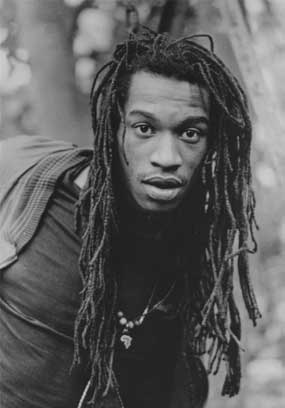

Meet him and enjoy his productions. Would you like to read his biography? CLICK HERE
 The poem we read belongs to this book Wicked World.
If you click HERE, you can find his own website. Enjoy it!
- Listen to the video and read the poem at the same time.
- Pay special attention to PRONUNCIATION AND RHYTHM!
- LOOK UP new words in your pronunciation dictionary, or our ON-LINE pronunciation dictionary (see right column)
- Get ready to READ IT ALOUD.
- paste the poem "The British"
- underline cooking verbs
- take a world map and highlight the countries were conquerors/immigrants have come from (e.g. Rome, Chile , ...)
stella :-)
domingo, 22 de abril de 2018
IDENTITY and LIVING BETWEEN TWO CULTURES.

JULIA ALVAREZ
- "Names/Nombres" (April 18th)
- "My First Free Summer" (April 25th)
AMY TAN
- "Fish Cheeks" (April 29th)
PORTFOLIO:
- Read the stories
- look up more information if you feel like it,
- take down notes in class
- PASTE the list below and complete it for each story.
Title:
Author:
Genre:
Setting:
Character(s):
Short summary:
Analysis/Notes:
Extra information:
stella :-)
miércoles, 18 de abril de 2018
MEET THE WRITERS
Meet: Julia Alvarez
"Names/Nombres" is an essay or a short story written by Julia Alvarez. Its main theme is: One's name is essential to one's identity.
PORTFOLIO:
"Names/Nombres" is an essay or a short story written by Julia Alvarez. Its main theme is: One's name is essential to one's identity.
PORTFOLIO:
- watch the video (you can activate subtitles)
- take down notes of the key topics she mentions.
- paste them onto your portfolio
stella :-)
AMY TAN AND JULIA ALVAREZ


PORTFOLIO:
- PASTE WRITERS' ORIGINAL BIOGRPHIES
- CHOOSE ONE AND RE-WRITE IT -as a paragraph, NOT a bulleted list-, using your own words and including the data obtained in class during the group discussion.
- SELECT key information and write ONLY ONE PARAGRAPH.
stella :-)
Suscribirse a:
Entradas (Atom)